When Is a Court Decision Unfair—and When Is It Simply Unfavorable?
Courts routinely make decisions that leave one side disappointed. A motion is denied. A lawsuit is dismissed. Evidence is excluded. Damages are less than expected. A defendant is found liable, or a plaintiff fails to prove a claim.
For the person who loses, the result may feel profoundly unfair.
But an unfavorable decision and an unfair decision are not necessarily the same thing.
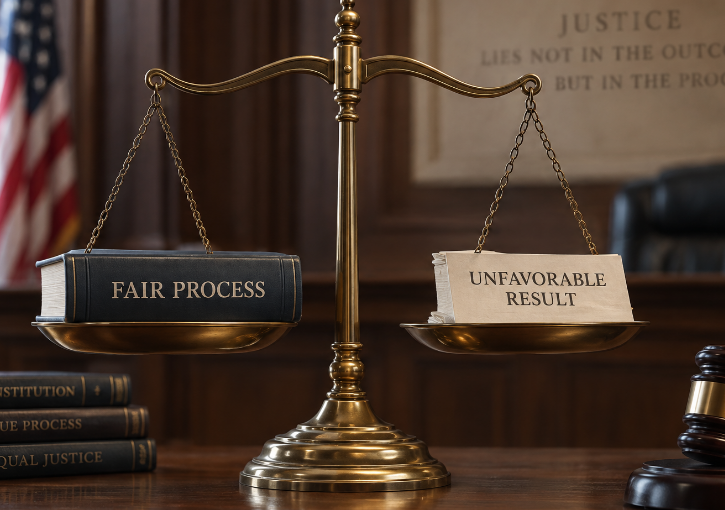
A functioning legal system cannot guarantee that every participant will receive the outcome they hoped for. What it can attempt to guarantee is something different: a fair process, an impartial decision-maker, an opportunity to be heard, and a decision reached according to law.
Understanding that distinction is fundamental to understanding how courts work.
Fairness Does Not Mean Everyone Gets the Result They Want
Most court proceedings involve competing positions.
One party may believe a contract was breached. The other may believe it was not. A prosecutor may contend that the evidence proves an offense beyond a reasonable doubt, while the defendant disputes that conclusion. Two parents may each believe their proposed custody arrangement is best for their child.
The court may ultimately have to choose between positions that cannot both prevail.
That means the existence of a losing party does not itself demonstrate unfairness.
The more important questions concern how the decision was reached.
Was each side given appropriate notice?
Did each side have a meaningful opportunity to present its position?
Was the decision-maker impartial?
Were the applicable legal rules followed?
Was the decision supported by evidence the court was permitted to consider?
Those questions address procedural and legal fairness rather than satisfaction with the result.
Procedural Fairness Matters
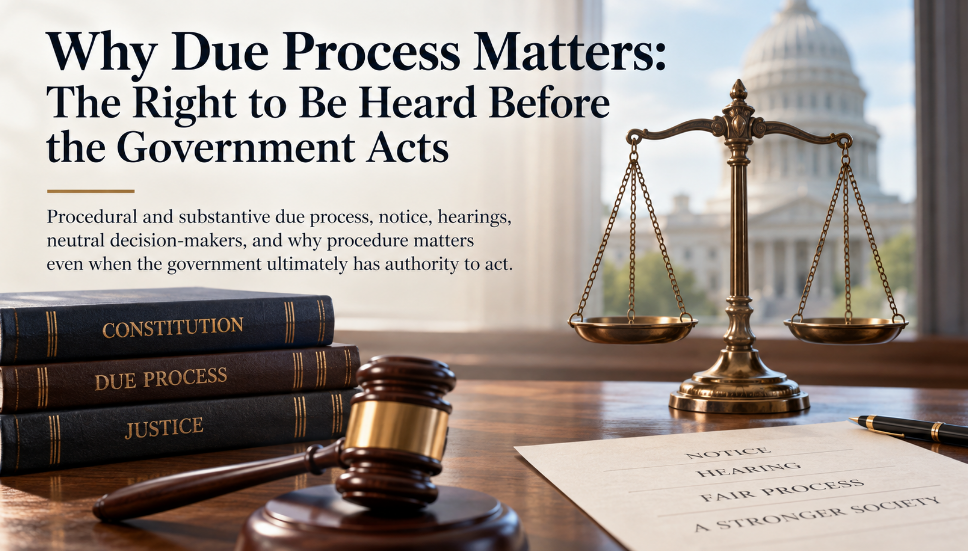
One of the most important protections in the judicial system is the opportunity to participate meaningfully in proceedings that affect a person's rights or interests.
The precise procedures vary enormously depending on the type of case. A criminal trial, administrative hearing, small-claims proceeding, and appellate case do not operate under identical rules.
But several principles repeatedly appear throughout the legal system.
A person generally should receive adequate notice of proceedings affecting that person. Parties ordinarily must have an appropriate opportunity to present arguments or evidence. Decisions should be made by an authorized and sufficiently impartial decision-maker. Applicable procedural rules should be followed.
A person can therefore lose a case even though the proceeding was fair.
Conversely, a person might have legitimate concerns about the fairness of a proceeding even when it is impossible to say that a different procedure necessarily would have produced a different ultimate result.
The Right to Be Heard Does Not Mean the Right to Prevail
The opportunity to be heard is central to due process.
But being heard is not the same as being agreed with.
A judge can carefully consider a party's argument and reject it. A court can admit evidence and ultimately give that evidence little weight. A judge can listen to conflicting witnesses and find one more credible than another.
None of those circumstances, standing alone, establishes that the process was unfair.
The right is generally to a meaningful opportunity to present a position—not to a guarantee that the decision-maker will accept it.
That distinction can be difficult when the consequences of a ruling are significant, but it is essential.
Courts Often Must Choose Between Conflicting Evidence
Many cases do not involve a simple choice between an obviously true account and an obviously false one.
Evidence can conflict.
Witnesses may remember events differently. Documents may support different interpretations. Experts may disagree. Circumstantial evidence may permit competing inferences.
The judge or jury may therefore have to determine what evidence is credible and how much weight it deserves.
A party's disagreement with that determination does not automatically establish unfairness.
The legal question may instead be whether the decision-maker was permitted to make that determination and whether sufficient evidence supported the resulting finding under the applicable standard.
Legal Error Is Different From Disagreement
Courts can make mistakes.
Judges may incorrectly interpret a statute, apply the wrong legal standard, admit evidence that should have been excluded, exclude evidence that should have been admitted, or make other errors during a proceeding.
The legal system provides mechanisms for addressing certain errors, including motions for reconsideration, motions for a new trial, appellate review, extraordinary writ proceedings, and other procedures depending on the jurisdiction and case.
But even the existence of an error does not always mean a judgment will be reversed.
Appellate courts frequently distinguish between errors that affected the outcome and errors that did not materially prejudice a party's rights. The precise standard depends upon the type of error and the governing law.
This reflects another important distinction: a court can make an imperfect decision without the entire proceeding necessarily being legally invalid.
An Unfavorable Ruling May Still Be Well Reasoned
A judge may issue a decision explaining the governing law, identifying the relevant evidence, addressing the parties' principal arguments, and explaining why one side prevailed.
The losing party may strongly disagree with every conclusion.
That disagreement can be entirely sincere.
But a disagreement about the court's reasoning is different from evidence that the court refused to provide a fair process.
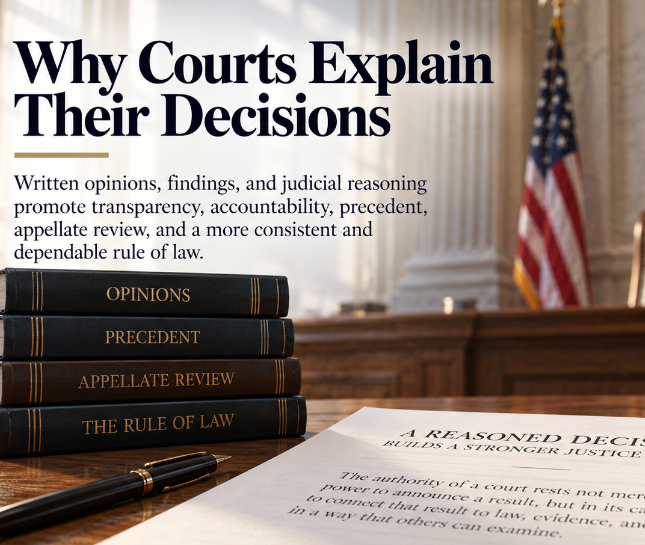
This is one reason written decisions can be so valuable. They allow the parties—and, when appropriate, reviewing courts—to examine how the result was reached rather than merely seeing who won.
What Can Raise More Serious Fairness Concerns?
Certain circumstances can present more substantial questions about whether a proceeding was fair.
Examples can include a party not receiving legally required notice, being improperly denied an opportunity to present material evidence, application of the wrong legal standard, a decision based on information a party had no meaningful opportunity to address, legally significant bias or conflicts of interest, or materially different treatment without a lawful basis.
Whether any particular circumstance amounts to a legal violation depends heavily on the facts, governing law, procedural posture, and jurisdiction.
Not every irregularity establishes a due-process violation or requires reversal.
But these kinds of issues concern the integrity of the decision-making process itself rather than simply dissatisfaction with its outcome.
Judicial Impartiality Is Essential
A fair proceeding requires a decision-maker who approaches the matter according to law rather than personal favoritism or prohibited bias.
Judicial ethics rules, recusal laws, and procedural safeguards are intended to protect that principle.
At the same time, an adverse ruling is not itself evidence that a judge is biased.
Judges necessarily make decisions against parties throughout litigation. If ruling against someone were enough to establish bias, courts could not function.
Questions of judicial impartiality therefore generally require something more specific than the fact that a judge repeatedly rejected one party's arguments.
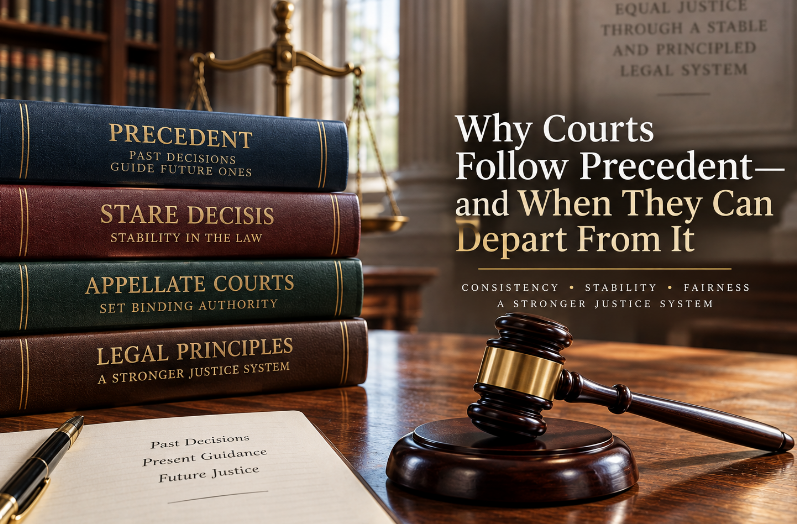
Consistency Is Important—but Cases Are Rarely Identical
People sometimes compare two court decisions and conclude that different outcomes prove unfairness.
Sometimes inconsistent treatment can raise legitimate legal questions.
But cases that appear similar from a distance may differ in legally important ways.
The evidence may be different. The procedural history may be different. Different statutes may apply. One party may have preserved an argument while another did not. The governing precedent may have changed. The applicable burden of proof may differ.
Equal justice does not necessarily require identical results whenever two cases share superficial similarities.
It requires that legally relevant similarities and differences be treated according to the governing law.
Appeals Are Not Simply Second Trials
A party who believes a trial court reached the wrong result may sometimes seek appellate review.
But an appeal ordinarily does not mean that a new group of judges simply decides whether it would have reached the same result.
Appellate review is structured around particular legal standards.
Some questions are reviewed independently. Other decisions receive substantial deference. Certain factual findings may be disturbed only under limited circumstances. Some issues cannot be raised on appeal if they were not properly preserved in the lower court.
Those distinctions matter because an appellate court's role is generally to determine whether reversible legal error occurred—not merely whether another judge might have decided the case differently.
A Fair Process Can Produce a Painful Result
Perhaps the hardest aspect of this distinction is that a proceeding can be procedurally fair while producing severe consequences for one side.
Someone can lose money, property, liberty, parental rights, employment-related claims, or another interest that matters enormously.
The seriousness of those consequences does not make procedural fairness less important. It makes it more important.
The purpose of procedural safeguards is not to eliminate difficult outcomes. It is to ensure that government power is exercised through a system governed by rules rather than arbitrary decision-making.
An Unfair Process Can Also Produce the “Right” Result
The opposite problem is equally important.
Suppose a decision-maker reaches a conclusion that ultimately appears factually correct but does so through a procedure that denied a party a legally required opportunity to participate.
The apparent correctness of the result does not necessarily cure the procedural problem.
Fair legal institutions depend not only on outcomes but also on legitimate methods for reaching those outcomes.
Otherwise, procedural protections would matter only when someone could prove in advance that following them would change the result.
That is not how fundamental procedural safeguards are intended to operate.
Fairness Requires Looking Beyond Who Won
When evaluating a court decision, the most useful question is often not simply:
Did the right person win?
A more complete inquiry asks:
Was the proceeding conducted according to law?
Were the parties given the process they were entitled to receive?
Was the decision-maker impartial?
Was the ruling based on permissible evidence and applicable legal standards?
Did the court explain its reasoning when an explanation was required or appropriate?
And, if an error occurred, was there a mechanism for meaningful review?
Those questions focus attention on the institutional safeguards that distinguish judicial decision-making from arbitrary exercises of power.
The Difference Matters
Courts cannot promise favorable outcomes.
They can, however, be expected to provide procedures designed to make decisions fairly, consistently, and according to law.
That is why losing a case does not necessarily mean a person was treated unjustly—and why winning a case does not necessarily prove that every aspect of the process was fair.
The legitimacy of a judicial decision depends on more than its result.
It also depends on the process used to reach it.