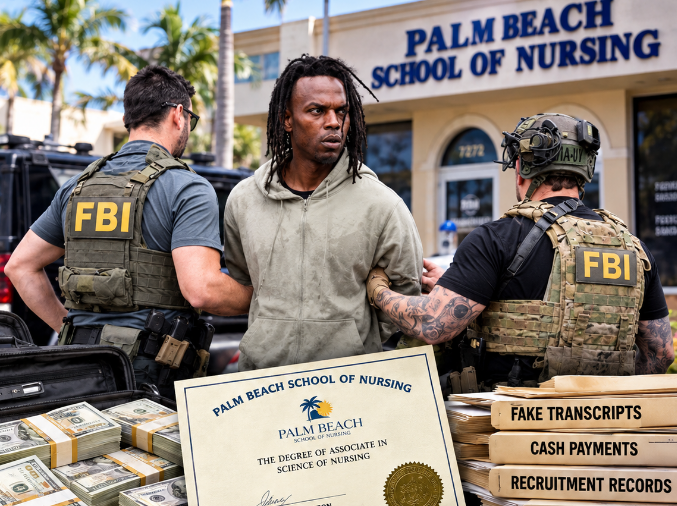
 For an aspiring nurse, a nursing-school transcript is supposed to document years of work.
Courses. Examinations. Clinical training. Hours spent learning how to care for patients before being permitted to seek a professional nursing license.
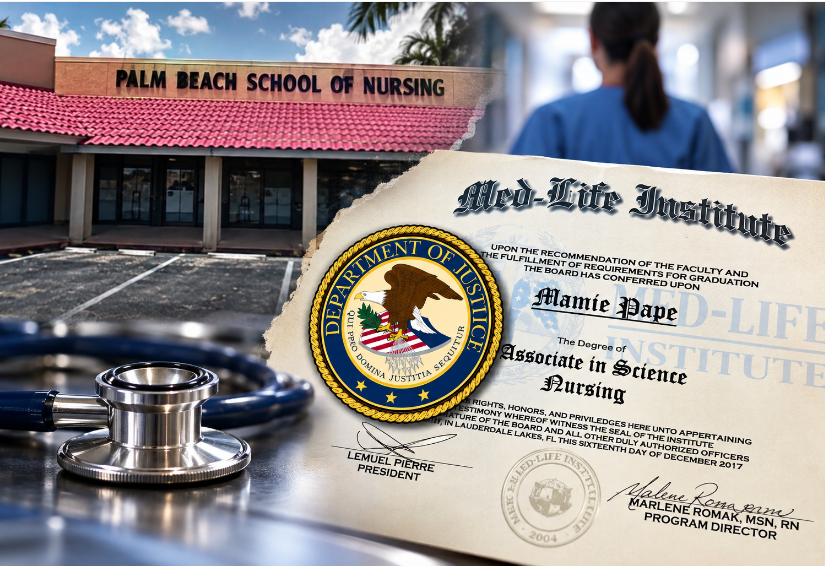
At Palm Beach School of Nursing in Florida, federal prosecutors uncovered another route.
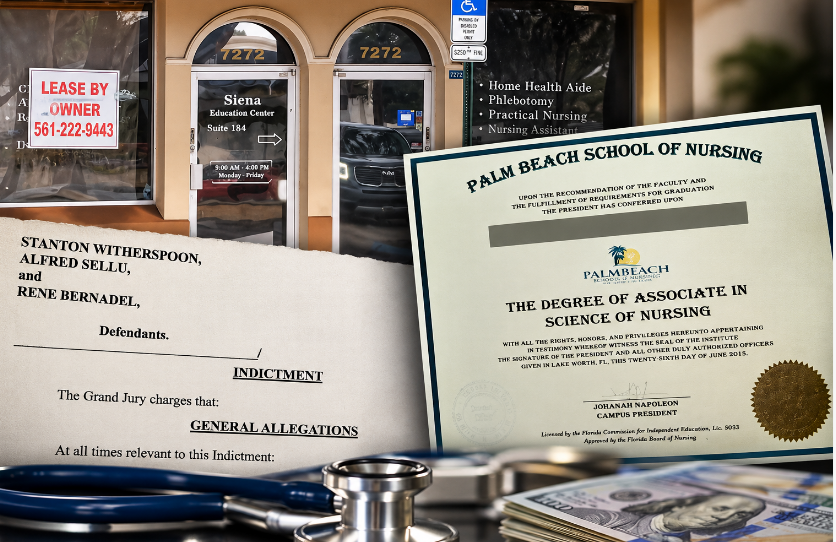
According to admissions made in federal court, some aspiring nurses paid the school $15,000 and received nursing diplomas and transcripts representing that they had completed required courses and clinical training when they had not.
The documents were not merely decorative certificates.
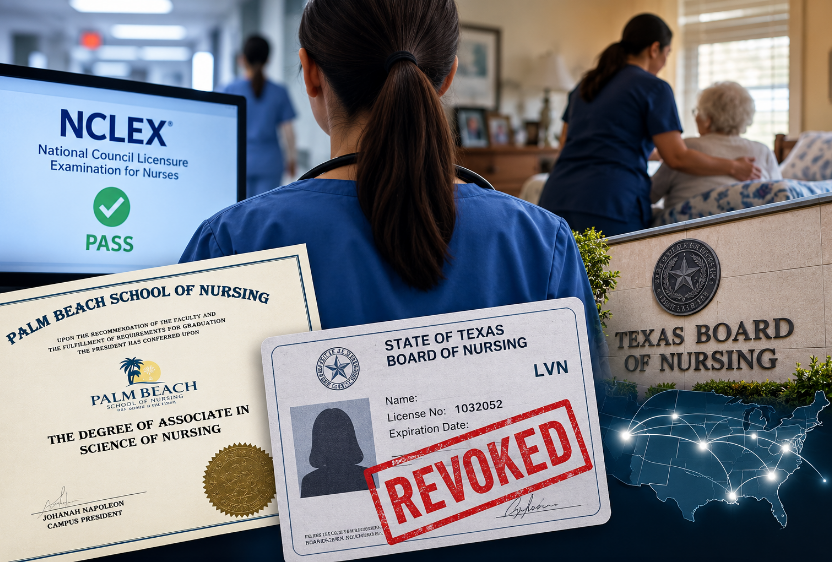
They provided the educational credentials purchasers needed to qualify for the national nursing licensing examination. Those who subsequently passed that examination could obtain nursing licenses and eventually work for health-care providers.
And this was not merely an allegation that disappeared after an indictment.
The school's owner pleaded guilty. Its finance director pleaded guilty. Recruiters pleaded guilty. Other participants were convicted at trial.
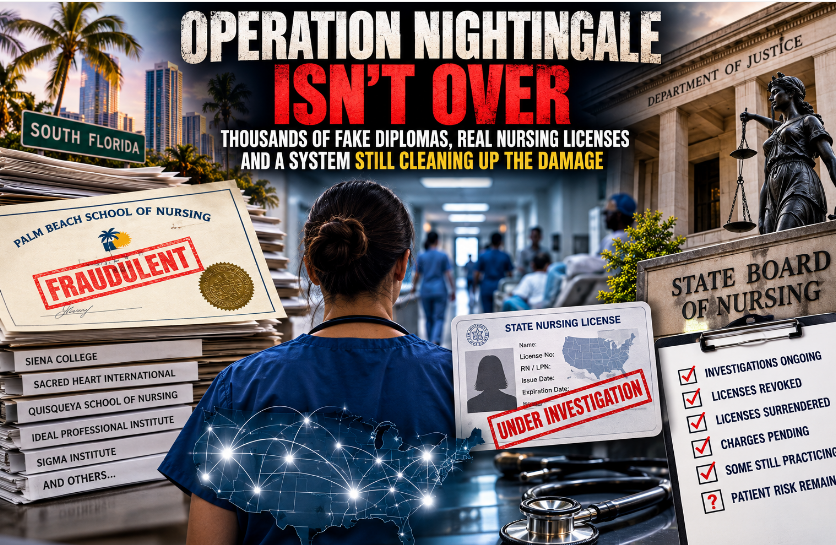
By the time the prosecutions unfolded, Palm Beach School of Nursing had become one of the central institutions in the federal investigation known as Operation Nightingale.
The School Was Supposed to Train Nurses
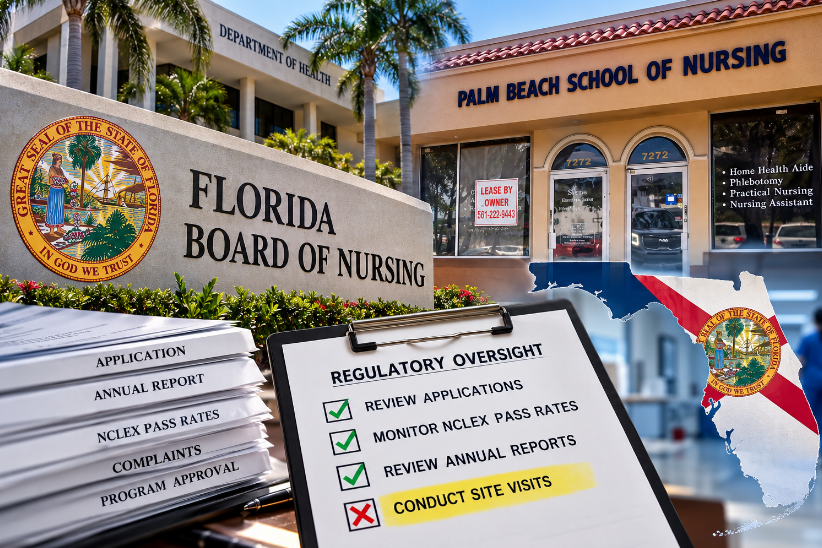
Palm Beach School of Nursing operated in Palm Beach County, Florida.
According to federal charging documents, its stated objective was conventional enough: prepare students to satisfy Florida licensing requirements, qualify for the national nursing examination and ultimately work as registered nurses or licensed practical or vocational nurses.
That required more than receiving a piece of paper.
Students were supposed to complete nursing courses and clinical training.
But prosecutors alleged that the school, working with recruiters, generated diplomas and transcripts for people who had not completed that education.
The documents represented otherwise.
Federal prosecutors said aspiring nurses used the fraudulent records to obtain RN or LPN/VN licenses in various states and jobs with health-care providers that did not know their educational credentials were fraudulent.
The Finance Director Explained the Price
One of the clearest descriptions of how the operation worked came from inside the school itself.
Krystal Lopez served as Palm Beach School of Nursing's finance director.
On May 10, 2023, Lopez pleaded guilty to conspiracy to commit wire fraud.
During her guilty-plea proceedings, according to the U.S. Attorney's Office, Lopez admitted that she processed applications for people who were issued fraudulent nursing-school diplomas and transcripts.
She also admitted how much those students paid:
$15,000 each for the documents.
Four other defendants pleading guilty in the same case admitted recruiting people who wanted credentials allowing them to work as registered nurses, licensed practical nurses or vocational nurses.
They admitted working with Palm Beach School of Nursing to create and distribute diplomas and transcripts stating that those people had attended the school and completed the necessary courses and clinicals.
They had not.
All five defendants admitted profiting from the operation.
The Owner Had Already Pleaded Guilty
The school's owner, Johanah Napoleon, had been charged separately.
Napoleon pleaded guilty in November 2022 to wire fraud and conspiracy to commit wire fraud.
In July 2023, she was sentenced to 21 months in federal prison, followed by three years of supervised release.
The court also ordered her to forfeit $3.2 million.
That forfeiture provides some indication of the financial scale surrounding the operation.
But Palm Beach School of Nursing was not operating only through people physically walking into a Florida school.
The federal cases describe a network.
Recruiters outside Florida found aspiring nurses seeking credentials. Information moved between recruiters and the school. The school generated educational records. Those records then traveled back out of Florida and into state licensing systems around the country.
A related federal prosecution in Maryland provides an especially revealing example.
Recruiters Could Receive 40 Percent
Federal prosecutors in Maryland later described how recruiter Iroghama Ogbeide Asiegbunam worked with Napoleon to sell fraudulent RN degrees from Palm Beach School of Nursing to people in Maryland and New York.
According to the Justice Department, Asiegbunam sent student grades from Maryland to the school's registrar in Florida.
In return, he received Palm Beach School of Nursing transcripts for people who had not actually attended the school.
The financial arrangement was also documented.
When Asiegbunam sold someone a Palm Beach School of Nursing degree, the purchaser paid the school directly.
The school then paid Asiegbunam 40 percent of the tuition as his recruiting compensation.
Federal prosecutors said he received approximately $272,400 from Palm Beach School of Nursing.
The records therefore describe something substantially more organized than an employee quietly producing an unauthorized diploma.
There were customers.
There were recruiters.
There were payments.
There were commissions.
And there was a Florida nursing school capable of generating transcripts that could be presented to government licensing agencies.
The Graduation Date Could Be Part of the Process
Another related prosecution provides an even more striking detail.
In a Maryland federal case involving recruiter Emmanuel Nwaokwu, prosecutors said he conspired with Napoleon and others beginning in 2018 to sell fraudulent Palm Beach School of Nursing RN and LPN degrees.
According to the Justice Department, Nwaokwu generally charged $17,000 for RN degrees and between $6,000 and $10,000 for LPN degrees.
Prosecutors said purchasers were instructed to identify Palm Beach School of Nursing on their NCLEX applications but leave the graduation date blank.
The date could then be backdated to make it appear that the person graduated before the school lost its licensure.
The Justice Department said those fraudulent documents helped purchasers obtain nursing licenses, including licenses from the Maryland Board of Nursing, and ultimately employment in health care.
The Registrar Went to Trial
Not everyone pleaded guilty.
Gail Russ, the registrar of Palm Beach School of Nursing, went to trial.
Following a three-week federal jury trial, Russ was found guilty of wire fraud and conspiracy to commit wire fraud.
In April 2024, a federal judge sentenced her to 78 months in prison, followed by three years of supervised release.
The court also ordered forfeiture of $861,672.
Two other defendants convicted in connection with the scheme received prison sentences of 36 months and 33 months and were ordered to forfeit approximately $4.7 million and $1.38 million, respectively.
By then, federal prosecutors reported that 27 defendants had been charged and convicted during 2023 in the broader Operation Nightingale diploma-fraud prosecutions.
The Diploma Was Only the Beginning
There is an important distinction in these cases.
A fraudulent nursing-school diploma did not automatically turn its purchaser into a licensed nurse.
The educational records allowed purchasers to qualify to take the NCLEX.
Some then passed it.
Those individuals could subsequently obtain state nursing licenses and employment.
That fact creates one of the most difficult questions arising from Operation Nightingale.
Passing the NCLEX demonstrated that a purchaser could pass the licensing examination.
It did not transform courses that were never taken into completed courses, or clinical training that was never performed into actual clinical experience.
The fraudulent transcript represented that education as having occurred.
Federal prosecutors said it hadn't.
A School's Records Became Government Credentials
That is what makes Palm Beach School of Nursing particularly important to understanding Operation Nightingale.
The product was not simply a diploma hanging on someone's wall.
A school's records could become the foundation for another government record.
The transcript could qualify its holder for an examination.
Passing that examination could lead to a nursing license.
The nursing license could lead to employment.
And employment could place that person inside a hospital, nursing home or other health-care facility caring for patients who had no practical way of knowing how that nurse obtained the educational credentials behind the license.
The federal prosecution established that people associated with Palm Beach School of Nursing sold records representing education and clinical training that had not occurred.
The next question is considerably larger:
Where did the people carrying those records ultimately go?