A nursing diploma is supposed to represent something substantial.
Behind it should be months or years of classroom instruction, examinations, supervised clinical training and demonstrated competency before a graduate is permitted to take the licensing examination that can eventually place that person at a patient's bedside.
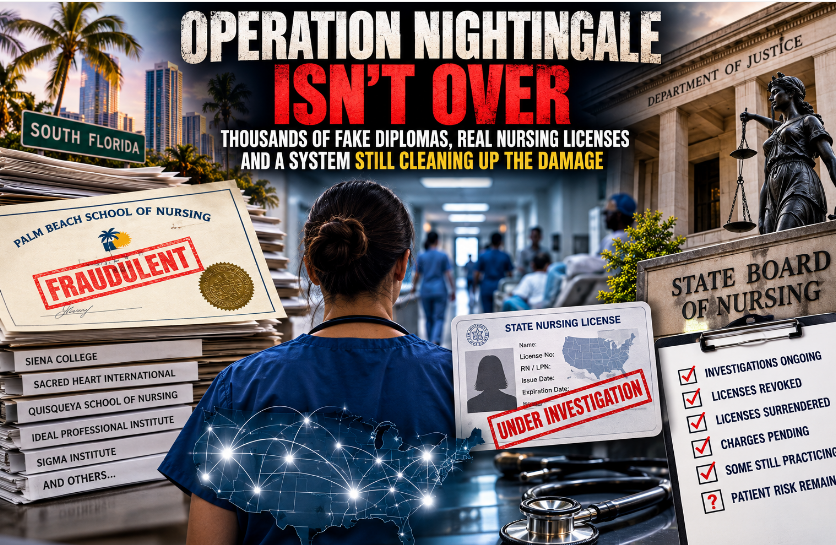
But federal prosecutors say that, for thousands of aspiring nurses, a collection of schools and recruiters operating largely out of South Florida offered a very different route.
They called the investigation Operation Nightingale.
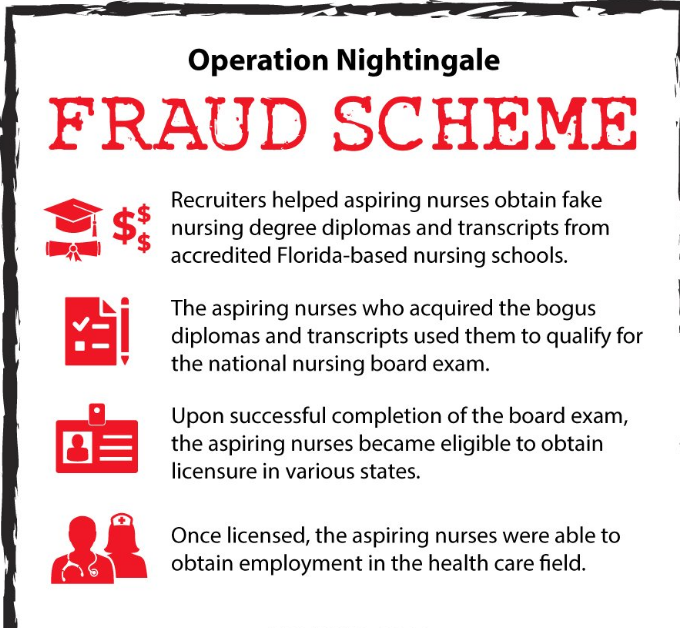
The federal cases describe a sprawling operation in which fraudulent nursing-school diplomas and transcripts were sold to people who had not completed the education and clinical training represented by those records. The documents could then be submitted to nursing regulators, allowing purchasers to qualify to take the National Council Licensure Examination, or NCLEX. Those who passed could potentially obtain nursing licenses and employment.
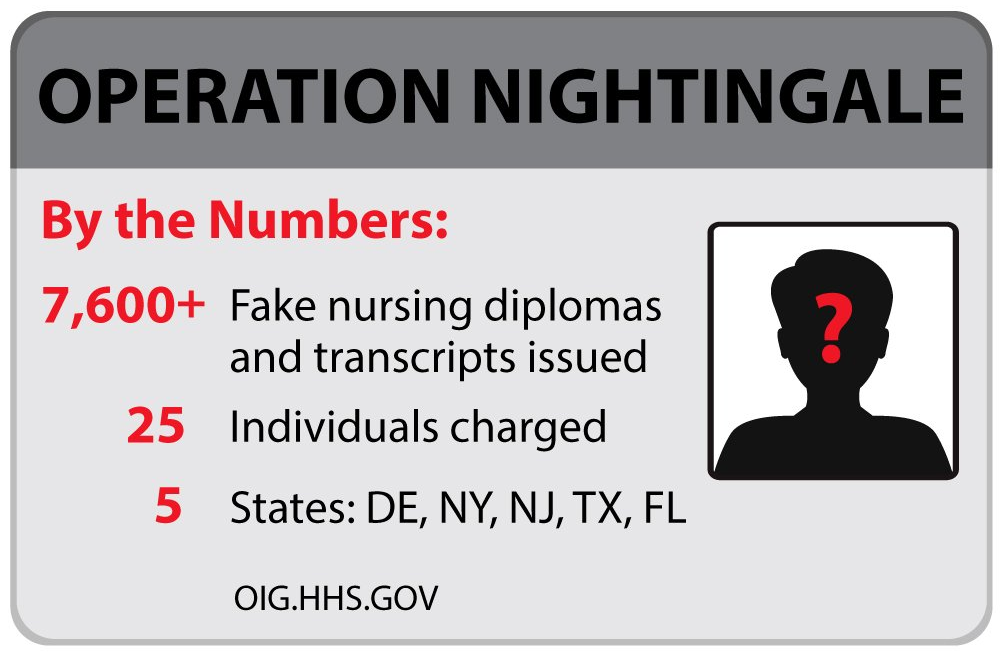
The first major round of federal charges was announced in January 2023.
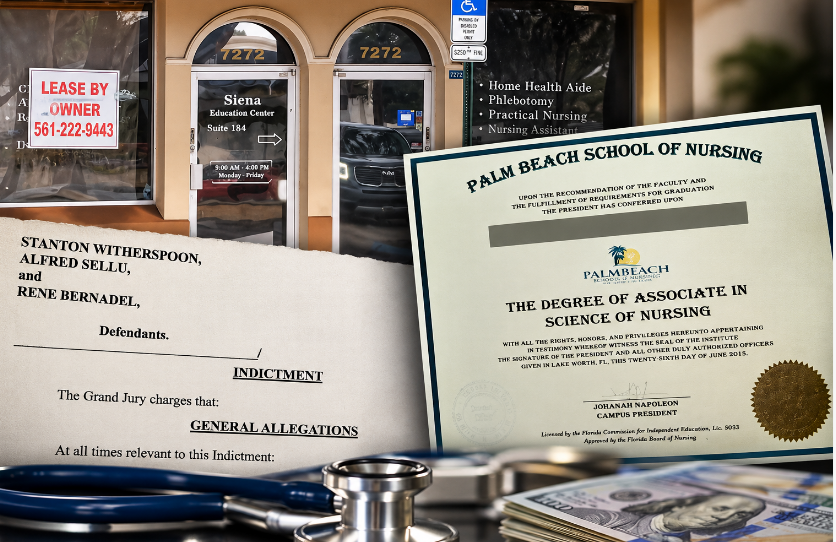
According to the U.S. Attorney's Office for the Southern District of Florida, the initial investigation centered on three South Florida nursing schools: Siena College, Palm Beach School of Nursing and Sacred Heart International Institute. Federal prosecutors said the overall scheme involved more than 7,600 fraudulent nursing diplomas.
The schools have since closed.
But the documents they generated did not necessarily remain in Florida.
Federal authorities said purchasers used fraudulent diplomas and transcripts to pursue licenses in multiple states and obtain nursing jobs with health-care providers around the country that did not know the credentials were fraudulent.
That transformed what might otherwise have been an education-fraud case into something much larger.
It became a question of who was actually working as a nurse.
$15,000 for the Documents
The federal court cases provide an unusually detailed window into how the system allegedly operated.
Prosecutors charged school owners, employees and recruiters with participating in arrangements through which people seeking nursing credentials were connected with schools capable of producing the necessary paperwork.
Some defendants eventually admitted what they had done.
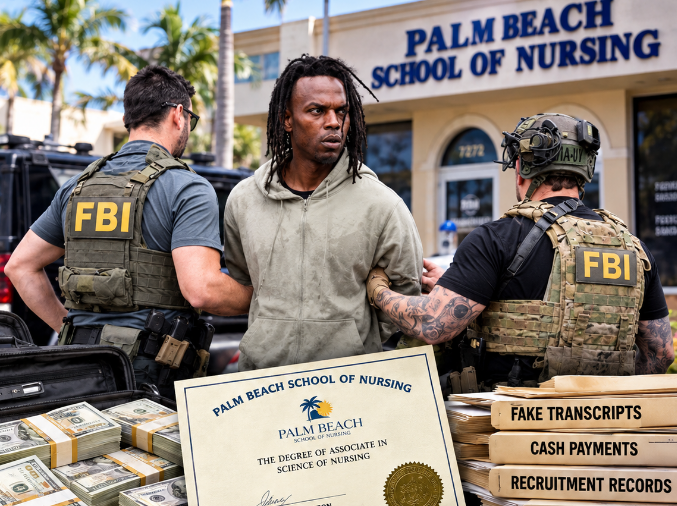
In May 2023, for example, several defendants pleaded guilty to conspiracy to commit wire fraud in connection with Palm Beach School of Nursing.
Federal prosecutors reported that Krystal Lopez, who served as the school's finance director, admitted processing applications for people who received fraudulent nursing diplomas and transcripts.
According to the government, each student paid the school $15,000 for the documents.
Other defendants admitted recruiting people who wanted credentials that would permit them to work as registered nurses or licensed practical or vocational nurses.
The resulting school records represented that those individuals had completed required courses and clinical training when, according to their admissions in federal court, they had not.
The paperwork nevertheless served an important purpose.
It could get someone through the door to the nursing licensing examination.
Passing the Nursing Exam Did Not Make the Education Real
Operation Nightingale presents an unusual distinction that will be important throughout this series.
Federal prosecutors did not allege that every person holding one of these credentials simply received a nursing license without taking the licensing examination.
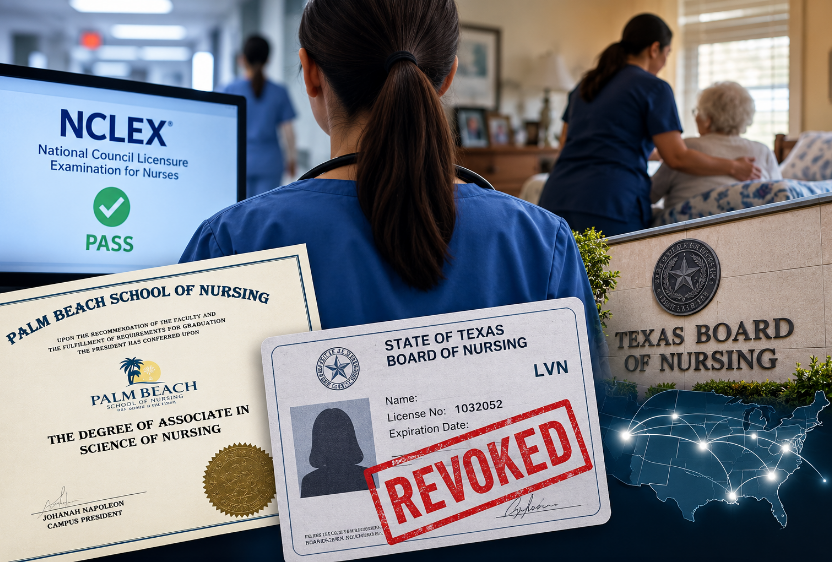
The fraudulent diploma and transcript provided eligibility to take the NCLEX.
Those who passed the examination could then use that result, together with the fraudulent educational credentials, to obtain a nursing license.
That means some individuals accused of using fraudulent educational records nevertheless passed the same national licensing examination taken by conventionally educated nursing graduates.
But passing the examination did not establish that the person completed the clinical and academic education represented on the transcript.
The federal cases concern precisely that missing piece.
A transcript might say its holder completed nursing courses and clinical training.
According to prosecutors, thousands had not.
The Investigation Didn't End in 2023
Operation Nightingale also turned out to be considerably larger than the cases originally announced.
By September 2023, the Justice Department reported that 20 defendants had pleaded guilty or been convicted at trial in the initial Operation Nightingale prosecutions.
Additional convictions and sentences followed.
Then came Phase II.
In September 2025, federal prosecutors announced fraud-related charges against another 12 defendants associated with multiple Florida nursing schools.
The government said those cases involved approximately 7,300 additional fraudulent diplomas.
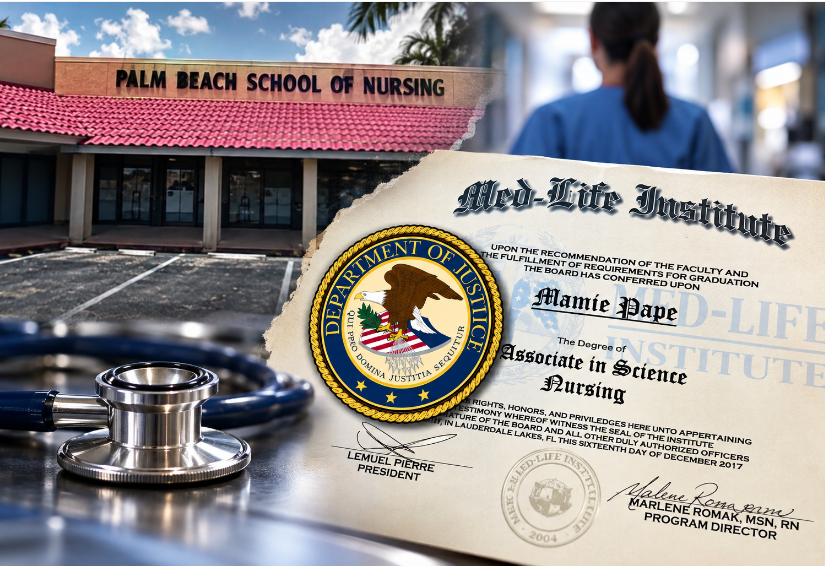
The schools identified in that phase expanded the investigation considerably. They included Carleen Home Health School, Sigma Institute of Health Careers, Techni-Pro Institute, Agape Academy of Sciences, Med-Life Institute, Ideal Professional Institute, Azure College and Academus University, among others identified in the federal cases.
Some of those Phase II matters remain at different procedural stages, so allegations against defendants who have not been convicted must be distinguished from conduct established through guilty pleas or verdicts.
But Operation Nightingale continues to produce convictions.
In June 2026, federal prosecutors announced that Carleen Noreus, owner and operator of two South Florida nursing schools, pleaded guilty to conspiracy to commit wire fraud and conspiracy to commit money laundering after her federal trial had already begun.
According to the Justice Department, approximately 2,274 people who obtained fraudulent credentials from those schools passed nursing board examinations, enabling them to obtain licenses and work as nurses in Florida and elsewhere.
That number illustrates the problem investigators faced.
Finding the people who sold fraudulent educational records was only one part of Operation Nightingale.
Authorities also had to determine where those records went.
A Paper Trail Across America
A fraudulent diploma can be produced in Florida in minutes.
Its consequences can last for years.
Once a credential enters a licensing system, it can become part of a much larger chain of records: a nursing-board application, an examination authorization, a professional license, an employment application, a personnel file and potentially a multistate nursing license.
That means the Operation Nightingale story does not end with the people who produced the diplomas.
There are thousands of credential recipients.
There are nursing boards that received their records.
There are hospitals, nursing homes and other health-care providers that hired some of them.
There are patients who may have been treated by them.
And there is now an enormous collection of federal court records, state licensing records, corporate filings, school records and public-agency documents that can help reconstruct what happened.
Court St Legal Is Examining Those Records
This article begins a new Court St Legal investigation into Operation Nightingale and the South Florida nursing schools at the center of it.
Unlike an investigation built primarily around anonymous accusations, much of the foundation for this story already exists in public records.
Federal indictments identify the alleged participants and describe how prosecutors say the arrangements operated. Guilty pleas establish conduct admitted by individual defendants. Trial verdicts and sentencing records establish additional facts. Asset-forfeiture proceedings can show where prosecutors say money went. State nursing boards hold licensing records. Florida agencies possess records concerning schools that operated under state regulatory authority.
Those distinctions matter.
An indictment is an allegation, not a conviction. A guilty plea is different. So is a jury verdict. And one person's conduct cannot automatically be attributed to every student, employee or school associated with the broader investigation.
Court St Legal will examine those records individually.
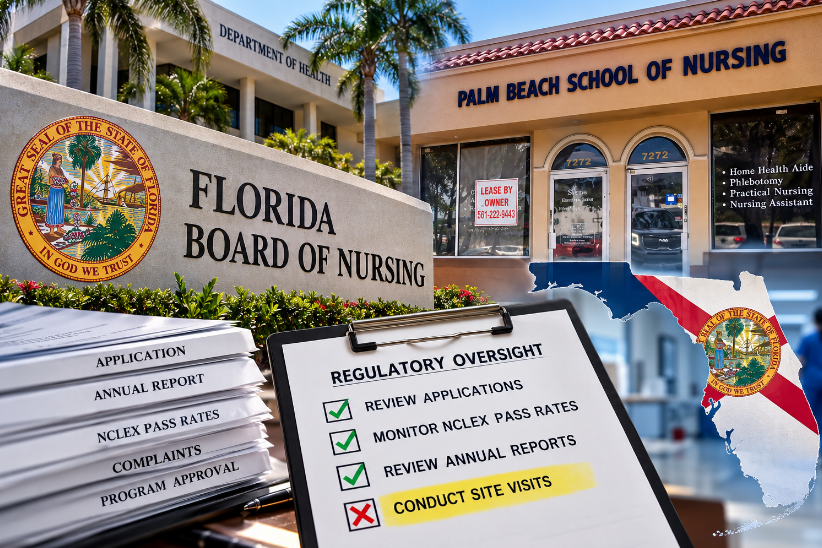
The articles that follow will look more closely at the schools that generated the credentials, the people who sold them, what purchasers actually received for their money, how the records were used to obtain licenses, what happened to people who worked as nurses using those credentials, and what Florida regulators knew about the schools while they were operating.
Operation Nightingale began as an investigation into pieces of paper.
The more consequential question is how many of those pieces of paper ultimately put someone in a nurse's uniform—and where those individuals went next.