The police officer receiving the alert may never have seen the camera that created it.
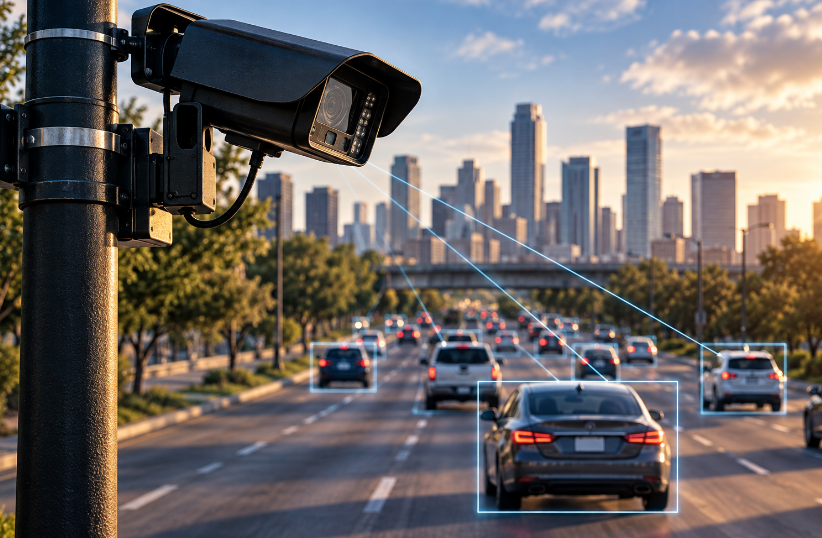
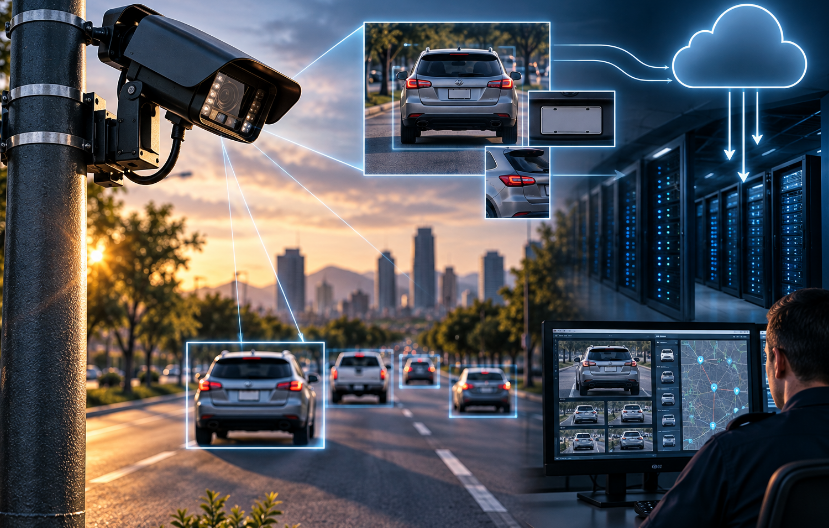
A vehicle drives past an automated license plate reader.
The camera captures an image.
Software interprets the characters on the plate.
The plate is compared against information about vehicles police are looking for.
Seconds later, an officer miles away can receive an alert indicating that a wanted vehicle has just been spotted.
When everything is correct, the process can help police locate a stolen vehicle, find a missing person or identify a vehicle connected with a serious crime.
But there is another possibility.
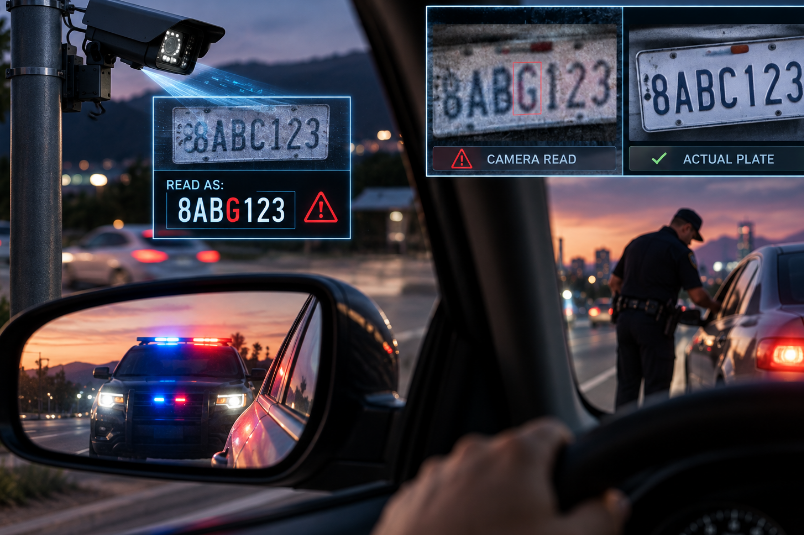
The computer can be wrong.
Flock Safety itself acknowledges this. Its current license-plate-reader policy says plate translation can sometimes be incomplete or inaccurate and instructs users to confirm the computer's interpretation before taking action based on an alert or search.
That warning reveals something important about automated surveillance.
A camera alert isn't the end of an investigation.
It is supposed to be the beginning of one.
How a Car Becomes an Alert
Flock's system can compare vehicles detected by its cameras against information contained in law-enforcement databases and other hot lists.
According to Flock, its cameras integrate with the National Crime Information Center and can automatically notify local law enforcement when a camera detects a vehicle associated with a relevant entry.
Imagine that a stolen vehicle has the plate:
8ABC123
A camera photographs another vehicle.
The software analyzes its plate.
If the system concludes that it has detected 8ABC123, an alert can be generated.
But several different pieces of information have to be correct for that alert to mean what it initially appears to mean.
The camera has to capture the plate clearly.
The software has to interpret the characters correctly.
The database information has to be current.
The plate has to actually belong to the vehicle on which it appears.
And investigators still have to determine whether the vehicle's current driver has anything to do with whatever caused the plate to be entered into the database.
A failure at any one of those stages can change the meaning of the alert.
A Plate Can Be Misread
License plates are unusually difficult objects for a computer to read perfectly.
Cars move.
Lighting changes.
Plates become dirty.
Characters can be partially obstructed.
Camera angles vary.
Two characters may resemble each other.
Flock says low-confidence reads aren't provided to users and describes its systems as highly accurate, but its policy expressly acknowledges that plate translation can occasionally be incomplete or incorrect.
A 2026 investigation in Roseville, California, demonstrated how substantial those problems can become under particular deployment conditions.
Records reviewed by Business Insider indicated that a large percentage of alerts examined from Roseville's Flock system during 2023 and 2024 involved incorrectly interpreted plate information. The reporting attributed some of the problems to the city's particular camera configuration and older equipment. Roseville officials continued using the system while working through the performance issues.
That doesn't establish an error rate for Flock cameras generally.
It demonstrates something more limited but important:
Real-world accuracy can depend heavily on how and where the equipment is deployed.
The Computer Doesn't Pull the Car Over
There is an important human step between a camera alert and a police stop.
The camera doesn't activate a patrol car's lights.
An officer does.
That is why many law-enforcement policies require officers to verify an alert before acting on it.
For example, the Riverside County Sheriff's Office's Flock transparency portal states that hot-list hits must be human verified prior to action. The City of Riverside Police Department publishes the same requirement.
Flock's own policy similarly tells users to confirm the computer-generated plate translation before taking action.
That verification step can be enormously important.
An officer might compare the photograph captured by the camera with the actual vehicle.
Check the plate manually.
Confirm the database entry is still active.
Compare the vehicle's make, model and color.
Determine why the vehicle was entered into the system.
Those steps can potentially reveal a mistake before an innocent driver becomes part of it.
Courts Have Already Seen What Happens When Verification Fails
The underlying problem predates Flock.
Automated license plate readers have existed for years, and earlier cases show what can happen when officers treat a computer match as conclusive.
One particularly instructive case came from San Francisco.
In Green v. City and County of San Francisco, an automated license plate reader mistakenly identified Denise Green's Lexus as a stolen vehicle.
According to the Ninth Circuit's account of the incident, the officer did not visually confirm the plate before initiating a high-risk stop.
Green was confronted by multiple officers with guns drawn, ordered from the vehicle, forced to her knees, handcuffed and detained for as long as 20 minutes before officers determined that her car wasn't the stolen vehicle they were seeking.
The incident occurred years before today's Flock networks became widespread.
But the lesson is remarkably current.
The technology can change.
The basic danger doesn't.
A database match can become a real-world police encounter very quickly.
The Plate Might Be Correct and the Alert Still Wrong
Misreading the characters isn't the only way an automated alert can lead police toward the wrong person.
Suppose the camera reads a plate perfectly.
The database says that plate belongs to a stolen vehicle.
But the stolen vehicle has already been recovered and the database hasn't been updated.
Or someone stole the plate rather than the car.
Or the plate was cloned.
Or ownership of the vehicle changed.
Or the vehicle is being driven by someone entirely unrelated to the person police are trying to find.
The camera may have accurately answered one narrow question:
What plate appears to be on this vehicle?
That doesn't necessarily answer a much larger one:
Who is driving it, and have they done anything wrong?
The distinction matters because automated systems can produce information much faster than investigators can establish its context.
A Match Can Look More Certain Than It Is
Computers have a psychological advantage.
Their output looks precise.
A screen doesn't necessarily say:
We think this might possibly be the car.
Instead, an officer can receive a specific plate, photograph, location and time.
The information looks concrete.
And much of it may be.
The camera really was at that location.
A vehicle really passed it.
A photograph really was taken.
But the conclusion drawn from those facts can still be wrong.
That is why the difference between data and evidence of wrongdoing matters.
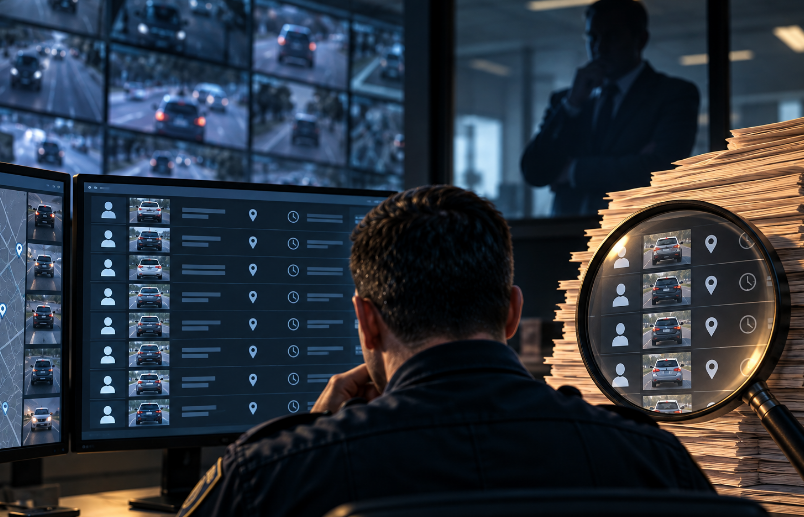
An automated license plate reader can generate an investigative lead.
It doesn't independently establish guilt.
The Scale Changes the Error Problem
Even a highly accurate system can produce mistakes when it operates at enormous scale.
Consider a system processing several million observations.
A tiny percentage of errors can still produce a meaningful number of incorrect records.
This isn't merely theoretical.
The Riverside County Sheriff's Office's transparency portal reported approximately 5.86 million vehicle detections in a 30-day period as of July 2026.
That doesn't mean millions of alerts were generated, nor does it tell us how many observations were incorrect.
It illustrates the scale at which these systems operate.
When technology processes millions of vehicles, accuracy isn't just a question of percentages.
It is also a question of what happens to the people represented by the mistakes.
The Consequences Aren't Distributed to a Spreadsheet
An error inside a database may look trivial.
One character incorrectly interpreted.
One stale record.
One mismatched vehicle.
But the person sitting inside the car doesn't experience a database error.
They experience police officers.
An investigation published in 2026 by the Institute for Justice collected incidents in which innocent motorists reportedly faced stops, detention or arrest after erroneous automated license-plate-reader information. One incident involved an Arkansas couple stopped after a Flock camera allegedly misread their SUV's plate.
The Institute for Justice is a public-interest law firm that litigates civil-liberties cases, so its characterization of the broader policy problem reflects its advocacy perspective. But the individual incidents it compiled illustrate the potential stakes when an automated alert is acted upon before an error is discovered.
A false alert isn't merely incorrect information.
It can change what happens on the side of a road.
Vehicle Characteristics Can Help Catch Mistakes
Ironically, some of the additional information collected by these systems can help officers determine that a plate match is wrong.
Flock's LPR records can include an image of the vehicle and characteristics such as its make and color in addition to the interpreted license plate.
Suppose a database says police are looking for a red pickup truck.
The camera reports the matching plate on a white sedan.
That discrepancy should matter.
Or suppose the captured photograph clearly shows a character on the plate that differs from the computer's interpretation.
That should matter too.
The more information an officer examines before initiating a stop, the greater the opportunity to identify inconsistencies.
This is why human verification isn't merely ceremonial.
It can function as the final error-detection layer between an automated system and a person.
But Human Verification Has Its Own Limitations
Requiring a person to review an alert doesn't guarantee that every mistake will be caught.
Officers work quickly.
Images may be unclear.
The wanted vehicle may have only recently been entered into a database.
Vehicle descriptions can change.
A stolen plate can legitimately appear on a completely different car.
And people themselves make mistakes.
There is also a more subtle problem.
Once a computer has told someone that a vehicle is wanted, the reviewer knows what they are expected to find.
That makes independent verification especially important.
The useful question isn't simply:
Can I confirm what the computer told me?
It is:
Does the underlying evidence independently support the computer's conclusion?
This Is Also a Fourth Amendment Question
When an incorrect automated alert leads to a traffic stop, the issue can eventually become constitutional.
The Fourth Amendment generally requires police to have an adequate legal basis for a vehicle stop.
Courts evaluating stops based on database information can therefore face difficult questions.
Was the officer entitled to rely on the alert?
Was the information sufficiently reliable?
Should the officer have recognized inconsistencies?
Was additional verification required?
Was the database itself wrong, or did the officer misunderstand what it reported?
The answers can depend heavily on the particular circumstances.
That makes automated policing different from a simple question of whether a technology is “legal” or “illegal.”
The camera may be lawful.
The database may be lawful.
The search may be lawful.
Yet the way an individual alert is acted upon can still generate a separate constitutional dispute.
The Best Safeguard May Be Skepticism
Automated license plate readers can accomplish something that would once have required enormous amounts of police labor.
They can watch roads continuously.
Read plates.
Compare vehicles against databases.
Search historical observations.
And notify officers within seconds.
That speed is the technology's advantage.
It can also be its danger.
The faster information travels from a camera to an officer, the less time there may be to ask whether the information is actually correct.
That is why Flock's own policy contains a sentence that may be more important than any claim about artificial intelligence or accuracy:
Users should confirm the computer's translation before acting on it.
The instruction recognizes a fundamental limitation of automated policing.
The computer can provide the lead.
The computer can identify the apparent match.
The computer can sound the alert.
But ultimately, someone still has to decide whether the machine is right.
And for the innocent driver approaching a police cruiser with its lights flashing, that distinction can make all the difference.